
Product Description
Product Description
Flat flex conveyor belt is the simplest type among all type of steel mesh conveyor belt. The materials of flat flex conveyor belt are stainless steel, high carbon steel, galvanized steel and other steel wires.
Flat flex conveyor belt is constructed by several loop wires and then be formed different edge. The simple structure make it economical and lightweight. It can help to save cost and reduce downtime.
Flat flex belt: also called ladder belt or flat line belt, always driven by sprockets, has good air permeability, tensile force uniform, fine workmanship, flat flex belt has characteristics of flexible rotation good stability, high temperature resistance,pressure resistance, corrosion resistance, long service life.
Specification
|
stainless steel flat flex belt conveyor mesh belt |
||||
|
material |
stainless steel 304 wire,low carbon steel wire |
|||
|
wire diameter(No.2) |
1.5mm,1.8mm,2mm,2.5mm,etc. |
|||
|
chain pitch (No.1) |
10mm,12mm,15mm,etc. |
|||
|
spiral pitch(No.3) |
65mm,67mm,70mm,etc. |
|||
|
opening number |
3openings,5openings,7openings,etc. |
|||
|
roll wide |
18cm,21cm,48cm,50cm,etc. |
|||
We are insisting that quality is the best for customers and it is the key point of cooperation. We must deliver the best quality steel mesh conveyor belt to our customers.We have strict test process, all the products should be test in the test department according to the international standard and industrial standard.
Detailed Photos
Three types of flat flex conveyor belt edge
The flat flex conveyor belt can be formed into different edge types, which can suit different equipment and driven types. You can choose the perfect 1 suit for you
Driven type of flat flex conveyor belt
The flat flex conveyor belt has different driven method. The common is idler, chain links and other driven methods are available.
Application
Widely used in Food , Baking , Battering , Breading ,Cooling , Enrobing , Freezing , Frying , Washing , Drying etc.
Accessories
stainless steel chain
gears(sprocket )
nylon sprocket
Packaging & Shipping
Inside by plastic film,by crate finaly
Features
Features of flat flex conveyor belt
- Large open area.
- Economical.
- Lightweight.
- High temperature resistance.
- Good air circulation.
- Easy to clean and save maintenance cost.
- Durable and long lifespan.
- Different edges for choice.
- Barriers can be added CZPT the belts.
- Chain link and other driven types.
- Curved rod network belt to suit different machines.
| Material: | Metal |
|---|---|
| Feature: | Wear-Resistant |
| Tensile Strength: | Strong |
| Product Name: | Flat Flex Belt |
| Wire Diameter: | 1.5mm,1.8mm,2mm,2.5mm |
| Chain Pitch: | 10mm,12mm,15mm,etc. |
| Samples: |
US$ 15.23/Meter
1 Meter(Min.Order) | |
|---|
| Customization: |
Available
| Customized Request |
|---|

Can Ladder Sprockets be Customized or Modified for Specific Conveyor Configurations?
Yes, ladder sprockets can be customized or modified to fit specific conveyor configurations and meet the unique requirements of different industrial applications. Here are some ways ladder sprockets can be tailored for specific conveyor setups:
- Size and Pitch: Ladder sprockets can be manufactured in various sizes and pitches to match the specific conveyor chain used in the system. Customizing the size ensures proper engagement and reliable power transmission.
- Number of Teeth: The number of teeth on the ladder sprocket can be adjusted based on the application’s speed and torque requirements. More teeth can distribute the load across a larger area, while fewer teeth can provide higher speed capabilities.
- Material Selection: Depending on the conveyor system’s operating environment and load capacity, ladder sprockets can be made from different materials, such as steel, stainless steel, hardened alloys, or high-strength engineering plastics.
- Tooth Profile: The tooth profile of ladder sprockets can be customized for specific chain types or to optimize engagement and reduce wear on the chain links.
- Hub Configuration: Ladder sprockets can be designed with different hub configurations to accommodate different shaft sizes, including through-bore hubs or taper-lock bushings.
- Special Coatings: Sprockets can be coated with special materials like corrosion-resistant coatings or anti-friction coatings to enhance their durability and performance in challenging environments.
- Attachment Options: In certain applications, ladder sprockets can be modified with custom attachments to suit unique conveyor configurations or facilitate the handling of specific products.
- Design Modifications: Sprocket manufacturers can make design modifications based on specific application requirements, such as adding additional support structures or features to enhance chain engagement and stability.
Collaborating with experienced sprocket manufacturers or conveyor system experts is crucial when customizing ladder sprockets. Their expertise can help ensure that the modifications are well-suited for the application, comply with industry standards, and maintain the sprocket’s performance and longevity.
Customized ladder sprockets offer the advantage of tailoring the conveyor system to specific needs, maximizing efficiency, and extending the sprocket’s service life under the unique demands of the industrial operation.

Can Ladder Sprockets be Used in Food Processing and Packaging Conveyors?
Yes, ladder sprockets can be used in food processing and packaging conveyors, but specific considerations must be taken to ensure compliance with food safety regulations and the unique requirements of the industry:
- Material Selection: Choose ladder sprockets made from food-grade materials that meet FDA and other food safety standards. Stainless steel or certain high-strength engineering plastics are commonly used for food processing applications due to their corrosion resistance and ease of cleaning.
- Sanitary Design: Ensure that the ladder sprocket design allows for easy cleaning and sanitization. Smooth surfaces without crevices or tight spaces can prevent bacterial growth and facilitate thorough cleaning.
- Resistance to Contamination: Select ladder sprockets that can withstand the harsh cleaning agents and sanitizing chemicals used in the food industry without degradation or contamination of the food product.
- Hygienic Lubricants: Use food-grade lubricants approved for use in food processing environments to lubricate the ladder sprockets and conveyor chain. Avoid lubricants that may come into contact with the food product.
- Proper Sealing: Ensure that the sprocket bearings are effectively sealed to prevent the ingress of contaminants and maintain a clean conveyor environment.
- Hazard Analysis and Critical Control Points (HACCP): Implement HACCP principles to identify potential hazards in the food processing and packaging process and implement control measures to prevent contamination. Properly selected and maintained ladder sprockets play a part in the overall hazard control strategy.
- Regular Inspection and Maintenance: Establish a robust maintenance program to regularly inspect and clean ladder sprockets to prevent contamination risks and ensure reliable conveyor performance.
- Compliance with Regulations: Ensure that the ladder sprockets and the overall conveyor system comply with relevant food safety regulations and industry standards, such as those set by the FDA, USDA, and other food safety agencies.
Due to the stringent requirements of the food processing and packaging industry, ladder sprockets used in these applications often have specialized designs and materials to ensure food safety and hygiene. It’s essential to work with conveyor system experts and sprocket manufacturers who understand the specific needs of the food industry and can provide suitable solutions.
By using ladder sprockets designed and constructed with food safety in mind, food processing and packaging conveyors can efficiently and safely handle food products while complying with the industry’s stringent regulations and quality standards.
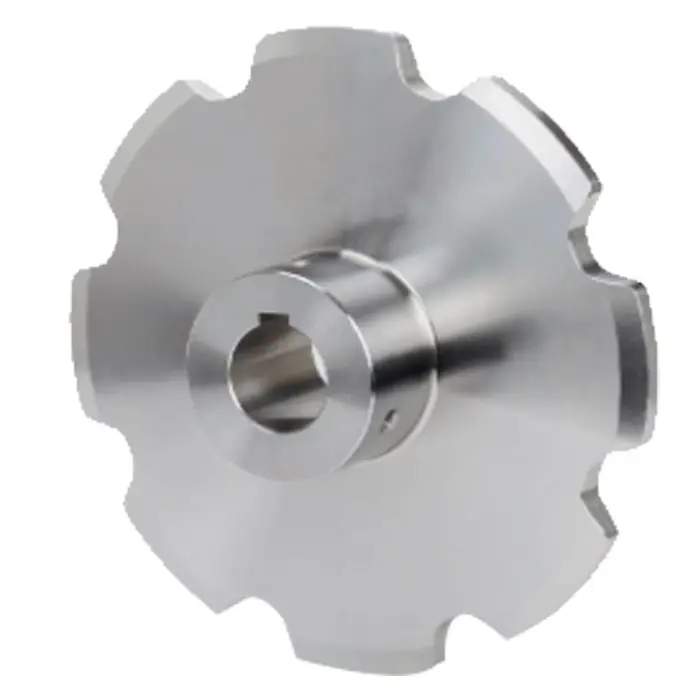
How do I Choose the Right Size and Pitch of a Ladder Sprocket for my Conveyor System?
Choosing the right size and pitch of a ladder sprocket for your conveyor system is critical to ensure proper operation, efficient power transmission, and prolonged equipment life. Here are the steps to guide you through the selection process:
- 1. Identify Conveyor Chain Type: Determine the type of conveyor chain used in your system. Different chain types have specific pitch measurements, and the ladder sprocket must match the chain’s pitch to ensure proper engagement.
- 2. Determine Sprocket Teeth Count: Calculate the required number of teeth for the ladder sprocket based on the desired conveyor speed, driven shaft RPM, and the chain’s speed factor. The speed factor is typically provided by the chain manufacturer.
- 3. Consider Chain Wrap Angle: Ensure that the sprocket size allows for sufficient chain wrap around the sprocket to prevent chain disengagement. The chain wrap angle should be within the manufacturer’s recommended range.
- 4. Assess Conveyor Load: Evaluate the conveyor system’s load and the maximum tension the chain will experience. The ladder sprocket’s material and design must be able to handle the load without deformation or failure.
- 5. Determine Shaft Diameter: The ladder sprocket’s bore size (inner hole) should match the driven shaft’s diameter or use a taper-lock bushing or through-bore hub to adapt the sprocket to the shaft size.
- 6. Consider Space Constraints: Ensure that the chosen ladder sprocket size fits within the available space in the conveyor system without interfering with other components.
- 7. Consult Manufacturer Data: Refer to the ladder sprocket manufacturer’s data and specifications to find the appropriate sprocket size and pitch options for your specific conveyor chain type.
- 8. Opt for High-Quality Materials: Choose a ladder sprocket made from high-quality materials that offer good wear resistance and durability, especially for applications with harsh environments or heavy loads.
- 9. Seek Expert Advice: If you are unsure about the selection process, consult with conveyor system experts or sprocket manufacturers for assistance in choosing the right ladder sprocket size and pitch.
By carefully considering the chain type, conveyor load, sprocket teeth count, and other relevant factors, you can select the appropriate size and pitch of a ladder sprocket that ensures optimal performance and reliable power transmission in your conveyor system.


editor by CX 2023-11-09


