
Ladder Sprockets for Industrial Baking Oven Conveyors
Overview
How many mesh-belt conveyors in your bakery have stalled this quarter because a warped sprocket jammed the chain inside a 180-degree-Celsius tunnel oven? Across Australian commercial bakeries, heat-induced sprocket failure remains the single largest cause of unplanned line stoppages — costing between AUD 4,000 and AUD 12,000 per incident in lost production, emergency labour and scrapped dough. Ever-power Australia Ladder Sprocket Co., Ltd. manufactures heat-stabilised ladder sprockets specifically for continuous baking oven conveyors, engineered to maintain pitch accuracy and tooth profile integrity through thousands of thermal cycles between ambient and 200 degrees Celsius.
Our baking-oven ladder sprockets are available in SS304 stainless steel for standard bakery wash-down environments and SS316L for high-humidity proofer-to-oven transfer zones. Electropolished tooth profiles (Ra less than 0.8 um) prevent dough adhesion and resist daily alkaline CIP cleaning. Every sprocket ships with full FDA 21 CFR material declaration, CMM dimensional report and Certificate of Conformance under our ISO 9001 : 2015 quality system.

Technical Specifications
| Parameter | Specification | Customisable Range |
|---|---|---|
| Material Options | SS304, SS316L, POM (low-temp zones) | Special alloy on request |
| Max Continuous Temperature | 200°C (SS316L) | Up to 300°C with Inconel |
| Pitch Range | 12.7 mm – 38.1 mm | 6.35 – 50.8 mm |
| Tooth Count | 10 – 72 teeth | 8 – 95 |
| Bore Diameter | 15 – 80 mm | 10 – 120 mm |
| Bore Tolerance | H7 | H6 on request |
| Hub Style | Type B flat hub | A / B / C / Split |
| Surface Finish | Electropolish Ra < 0.8 um | Ra < 0.4 um available |
| Hardness | HRC 20-25 (annealed) | — |
| Keyway Standard | AS 2062 / DIN 6885 | Custom keyway profiles |
| Chain Compatibility | ANSI 40-80, ISO 606 simplex/duplex | Modular belt tabs |
| Strand Configuration | Simplex, Duplex | Triplex on request |
| Thermal Expansion Coeff. | 16.0 x 10⁻⁶ /°C (SS304) | — |
| Corrosion Resistance | CIP alkaline wash, steam, humid air | Acid/chloride with 316L |
| FDA Compliance | 21 CFR 174-178 | EU 1935/2004 available |
| Weight (typical 40T 25.4P) | 1.8 kg | Varies by config |
| Concentricity | TIR < 0.03 mm | — |
| Set Screw | A2 stainless socket head | A4 marine grade |
| Lead Time (standard) | 10 business days ex-works | Expedite available |
| MOQ | 1 piece | — |
Performance Advantages — Ever-power vs Generic Sprockets
The critical differentiator in baking-oven service is operational lifespan at sustained elevated temperature. Generic carbon steel sprockets typically warp within 2,000-3,000 hours at 180 degrees Celsius, while our SS304/316L ladder sprockets maintain dimensional stability beyond 12,000 hours under identical conditions.
| Metric | Generic Carbon Steel | Ever-power SS304/316L |
|---|---|---|
| Service life at 180°C | 2,000-3,000 hr | 12,000-15,000 hr |
| Tooth profile deviation at 180°C | 0.15-0.25 mm after 1,000 hr | < 0.03 mm after 5,000 hr |
| Corrosion after 500 CIP cycles | Visible rust, surface pitting | No measurable change |
| Dough adhesion on tooth flanks | Significant — manual cleaning required | Negligible — self-shedding via CIP |
| FDA food-contact compliance | ❌ Not certified | ✅ FDA 21 CFR |
| Replacement labour downtime | 4-6 hr (corroded bore seizure) | 1-2 hr (clean removal) |
How Ladder Sprockets Work in Baking Oven Conveyors
Inside a tunnel baking oven, a continuous mesh belt or modular plastic belt transports dough pieces through sequential heating zones at controlled speeds — typically 0.5 to 3.0 m/min. The ladder sprocket is mounted on the drive shaft at the oven discharge end, engaging the belt or chain through precisely machined tooth profiles that wrap around the sprocket circumference.
The fundamental engineering challenge is thermal expansion compensation. At 180 degrees Celsius, an SS304 sprocket with a 200 mm pitch diameter expands approximately 0.58 mm in diameter. Our tooth profiles are designed with calculated thermal clearance so that the pitch circle diameter at operating temperature matches the chain pitch exactly — preventing the binding that causes chain jump on generic sprockets designed only for ambient dimensions. The drive torque is transmitted from the gearmotor output shaft, through the keyed hub, into the sprocket body, and distributed across the engaged teeth into the chain plates — typically 6-8 teeth share the load at any instant on a standard 40-tooth sprocket.

Compatibility
Chain Standards: ANSI 40 (12.7 mm), ANSI 50 (15.875 mm), ANSI 60 (19.05 mm), ISO 08B, 10B, 12B simplex and duplex roller chains. Also compatible with wire-mesh belt edge-drive chains and modular belt tab configurations from Intralox, Rexnord and Habasit.
Equipment: Tunnel ovens (Spooner, Baker Perkins, GEA, Buhler), deck ovens with belt return, proofer conveyors, cooling spirals and ambient transfer conveyors between baking zones.
Brand names listed for selection reference only; no trademark affiliation is implied.
Selection Guide — Parameter Comparison Table
Use this table to match your oven zone temperature and wash-down severity to the correct sprocket material:
| Oven Zone Temp | Wash-Down Chemical | Recommended Material | Surface Finish | Hub Type |
|---|---|---|---|---|
| Ambient – 80°C | Mild detergent | POM (acetal) | As-machined | Type B keyed |
| 80 – 120°C | Alkaline CIP | SS304 | Electropolish Ra < 0.8 | Type B or C |
| 120 – 200°C | Caustic + steam | SS316L | Electropolish Ra < 0.6 | Type C split |
| 200 – 300°C | Minimal (dry oven) | Inconel 625 | Machined | Weld-on |
Installation Steps for Baking Oven Conveyors
Step 1 — Oven Cool-Down: Allow oven to reach ambient temperature before sprocket replacement. Thermal gradients cause shaft dimensional variation that affects bore fit accuracy.
Step 2 — Shaft Inspection: Clean shaft journal. Measure diameter with micrometer — verify within H7 tolerance. Check keyway for burrs or corrosion pitting from steam exposure.
Step 3 — Anti-Galling Compound: Apply food-grade anti-seize (Loctite 8014 or equivalent) to shaft and bore surfaces. Stainless-on-stainless contact is prone to galling without lubrication.
Step 4 — Sprocket Mounting: Slide sprocket onto shaft. Align with idler sprocket at oven infeed using a straight edge spanning both sprockets. Maximum lateral offset: 0.5 mm.
Step 5 — Belt Tensioning: Engage mesh belt. Adjust take-up to achieve 2-3% sag at mid-span between drive and return. For wire mesh belts, verify edge-chain tension is equal on both sides.
Step 6 — Hot Commissioning: Run oven through a full heat-up cycle with belt running at production speed. Re-check tension after thermal equilibrium is reached (typically 45-60 minutes). Stainless steel expands and chain tension will change.
Troubleshooting: Chain Jumping Under Thermal Expansion
Symptom: Chain skips over sprocket teeth intermittently during oven warm-up phase (first 30-45 minutes of production start-up).
Root Cause: The sprocket pitch circle expands faster than the chain pitch during heat-up, creating momentary over-tight engagement followed by sudden release (jump). Common with sprockets designed without thermal clearance compensation.
Diagnosis: Measure sprocket OD at ambient and at operating temperature using a laser micrometer. Calculate pitch circle expansion. If expansion exceeds 0.05 mm per 100 mm of pitch diameter, the sprocket lacks adequate thermal design margin.
Solution: Replace with Ever-power thermally compensated ladder sprockets. Our tooth profiles are CNC-cut with calculated clearance that accounts for the differential expansion rate between sprocket and chain at the specified operating temperature. This eliminates jump during warm-up transitions.
Case Studies — Australian Baking Industry
★★★★★ — Industrial Bakery, Townsville QLD
Application: 120 m tunnel oven mesh-belt conveyor, 180°C continuous. Previous carbon steel sprockets warped every 8-10 weeks. Engineer Mark Sullivan noted: “We measured 0.2 mm tooth deviation after just 6 weeks on the old sprockets. The Ever-power SS304 units have been running 11 months with zero measurable distortion. Belt tracking improved immediately after installation.”
★★★★★ — Artisan Bread Producer, Melbourne VIC
Application: Stone-deck oven belt return drive, 150°C zone. Site engineer Phoebe Tran reported: “Dough residue used to clog the old sprocket teeth every shift. Since switching to electropolished SS304, the teeth self-clean during our daily CIP wash. We eliminated the manual scraping step entirely — saving 25 minutes per shift.”
★★★★★ — Biscuit Manufacturer, Sydney NSW
Application: High-speed rotary moulder discharge conveyor, ANSI 50 duplex chain at 3.2 m/min. Maintenance lead James Okoro observed: “Chain jump during oven warm-up was our number one complaint. Ever-power sprockets with thermal clearance compensation fixed it completely. We have not had a single jump event in 9 months.”
★★★★ — Frozen Pastry Manufacturer, Cairns QLD
Application: Proofer-to-oven transfer conveyor, high-humidity zone (95% RH, 40°C). Procurement officer David Liang commented: “We needed FDA documentation for our US export HACCP audit. Ever-power supplied the 21 CFR declaration, mill certificate and CoC within 48 hours. Smooth process.”
★★★★★ — Pie & Sausage Roll Producer, Adelaide SA
Application: Spiral cooling conveyor after oven, SS304 sprockets on both drive and idler. Reliability engineer Natasha Ferraro stated: “Our previous supplier could not hold bore tolerance — we had wobble and premature bearing wear. Ever-power bores are dead-on H7 every time. Bearing replacement rate dropped by 60%.”
Frequently Asked Questions
Recommended Companion Products
🔗Stainless Steel Ladder Chains
SS304/316L roller chains matched to sprocket material grade, eliminating galvanic corrosion in wash-down bakery environments. ANSI and ISO standard pitches.
⚙Food-Grade Shaft Bushings
Stainless steel taper-lock and QD bushings for hygienic, corrosion-free shaft mounting in tunnel oven drive assemblies.
⚪IP69K Sealed Bearing Units
Stainless housing, food-grade grease, rated for high-pressure wash-down. Mounts directly to oven-conveyor bearing pedestals.
Certifications & Standards Compliance
All baking-oven ladder sprockets manufactured to ISO 606 and ANSI B29.1 dimensional standards. Material verified against ASTM A276 / EN 10088-3. Facility certified ISO 9001 : 2015, independently audited by SGS and TUV. FDA 21 CFR material declarations and EU 1935/2004 food-contact statements available on request.
About Ever-power — Engineered for Bakery Heat
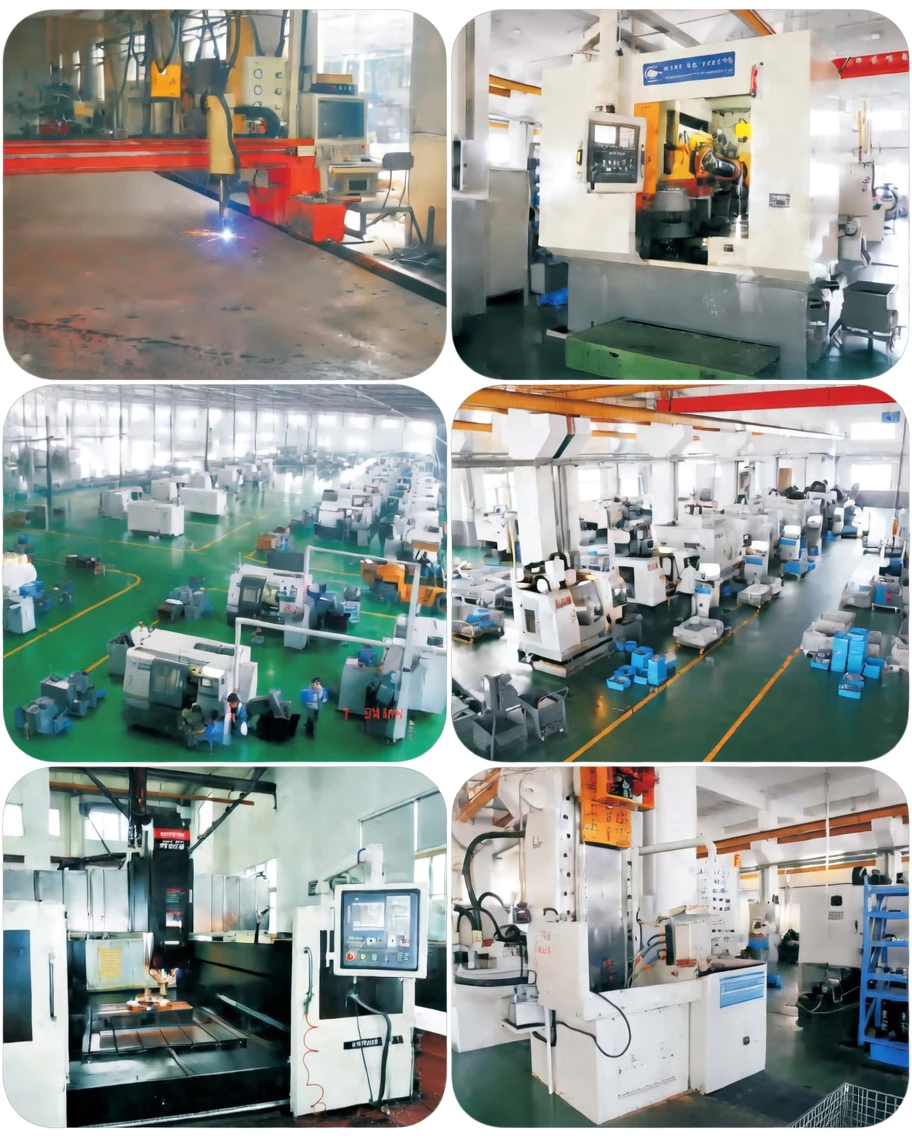
We are Ever-power Australia Ladder Sprocket Co., Ltd. Our production facility operates 5-axis CNC machining centres, wire EDM, in-house electropolishing and a CMM-equipped metrology lab — all dedicated to ladder sprocket manufacturing. We have supplied stainless steel oven-conveyor sprockets to commercial bakeries across Townsville, Melbourne, Sydney, Cairns and Adelaide for over 20 years. With 15,000+ SKUs delivered and a 98.4% on-time dispatch record, we understand that a bakery line cannot wait. Enquiries received before 2 PM AEST are quoted same business day.
Start Your Oven-Sprocket Project
Provide your oven temperature profile, belt type, chain pitch and bore diameter. We will recommend the optimal material grade and surface finish — backed by a formal quotation — within one business day. Contact us at [email protected] or visit our enquiry page to get started.


