
Productbeschrijving
Metal mesh strong Wire stainless steel flat flex conveyor belts for bread baking freezing drying are usually gear transmission belt, with good ventilation advantages, tension evenly, fine workmanship, the flat flex belts with a flexible rotation, good stability, High temperature, pressure resistance, corrosion resistance, long life and so on.Flat flex conveyor belts are used with a single-layer structure, lighter, the use of sprocket drive. Large open area (opening 70-85%), often used in the lighter weight of the product cooling, frying, baking, drying, heating, decoration, wrapped powder and packaging equipment.
| Specifications of Flat Flex Conveyor Belts | ||||
| Item | Wire diameter (mm) |
Pitch (mm) |
Open area (%) |
Edge type |
| FFCB-01 | 0.9 | 4.24 | 77 | Single/ double |
| FFCB-02 | 0.9 | 5.64 | 82 | Single/ double |
| FFCB-03 | 1.0 | 5.5 | 79 | Single/ double |
| FFCB-04 | 1.0 | 5.6 | 79.5 | Single/ double |
| FFCB-05 | 1.27 | 4.3 | 67 | Single |
| FFCB-06 | 1.27 | 5.5 | 73 | Single/ double |
| FFCB-07 | 1.27 | 6.0 | 76 | Single/ double |
| FFCB-08 | 1.27 | 6.35 | 77 | Single/ double |
| FFCB-09 | 1.27 | 7.26 | 80 | Single/ double/ C-shape |
| FFCB-10 | 1.40 | 6.40 | 76 | Single/ C-shape |
| FFCB-11 | 1.60 | 7.26 | 75 | Single/ double/ C-shape |
| FFCB-12 | 1.83 | 12.00 | 81 | Single |
| FFCB-13 | 1.83 | 12.70 | 82 | Single/ C-shape |
| FFCB-14 | 2.08 | 9.60 | 75 | Single/ C-shape |
| FFCB-15 | 2.35 | 12.70 | 78 | Single/ C-shape |
| FFCB-16 | 2.35 | 20.32 | 85 | Single |
| FFCB-17 | 2.80 | 12.70 | 72 | Single/ C-shape |
| Note: Custom specification is available if you can’t find the suitable size. | ||||
| Materiaal: | 304 Stainless/316 Stainless |
|---|---|
| Feature: | Oil-Resistant, Acid And Alkali Resistant, Tear-Resistant, Heat-Resistant, Cold-Resistant, Wear-Resistant |
| Treksterkte: | Sterk |
| Voorbeelden: |
US$ 30/stuk
1 stuk (minimale bestelling) | Order Sample |
|---|
| Aanpassing: |
Beschikbaar
| Aanvraag op maat |
|---|
.shipping-cost-tm .tm-status-off{background: none;padding:0;color: #1470cc}
|
Shipping Cost:
Estimated freight per unit. |
about shipping cost and estimated delivery time. |
|---|
| Payment Method: |
|
|---|---|
|
Initial Payment Full Payment |
| Currency: | US$ |
|---|
| Return&refunds: | You can apply for a refund up to 30 days after receipt of the products. |
|---|

How do I Prevent Wear and Damage to Ladder Sprockets during Conveyor Operation?
Preventing wear and damage to ladder sprockets during conveyor operation is essential to ensure their longevity and maintain the overall efficiency of the conveyor system. Here are some preventive measures to follow:
- Proper Lubrication: Apply the appropriate lubricant to the ladder sprockets and the conveyor chain regularly. Lubrication reduces friction between the sprocket teeth and the chain links, minimizing wear and prolonging the sprocket’s life.
- Chain Tension: Maintain the correct tension in the conveyor chain. Proper tensioning prevents excessive stress on the ladder sprockets and chain links, reducing wear and preventing premature failure.
- Chain Alignment: Ensure the conveyor chain is correctly aligned with the ladder sprocket. Misalignment can cause uneven wear on the sprocket teeth and chain links, leading to accelerated wear and potential damage.
- Cleanliness: Keep the ladder sprockets and the surrounding area clean from debris, dirt, and contaminants. Foreign particles can cause chain jamming, accelerated wear, and affect sprocket performance.
- Regular Inspection: Conduct regular visual inspections of the ladder sprockets to check for signs of wear, damage, or deformation. Early detection of issues allows for timely maintenance and prevents further damage.
- Replace Worn Sprockets: Monitor the condition of the ladder sprocket teeth regularly. If the sprocket teeth show significant wear, chipping, or deformation, replace the sprocket promptly to prevent further damage to the conveyor chain.
- Inspect Chain Wear: Regularly inspect the conveyor chain for signs of wear, stretching, or elongation. A worn chain can accelerate sprocket wear, so replace the chain if it is beyond its recommended service life.
- Load Capacity: Ensure that the ladder sprockets are appropriately sized and rated for the load capacity of the conveyor system. Using sprockets that are too small or not designed for heavy-duty applications can lead to premature wear and failure.
- Follow Manufacturer’s Guidelines: Adhere to the ladder sprocket manufacturer’s maintenance recommendations and service intervals. Manufacturers may provide specific guidelines for lubrication, tensioning, and inspection to optimize sprocket performance and longevity.
By following these preventive measures, you can minimize wear and damage to ladder sprockets, prolong their service life, and maintain a reliable and efficient conveyor system. Regular maintenance and inspections are essential to identify and address any potential issues early on, preventing costly downtime and ensuring the smooth operation of your conveyor system.

Are there any Safety Considerations when Working with Ladder Sprockets in Conveyor Systems?
Yes, working with ladder sprockets in conveyor systems involves specific safety considerations to ensure the well-being of workers and prevent accidents. Here are some essential safety measures:
- Lockout-Tagout Procedures: Before performing any maintenance or inspection on the conveyor system, follow proper lockout-tagout procedures to isolate energy sources and prevent accidental startup of the conveyor or sprocket during work.
- Protective Equipment: Provide appropriate personal protective equipment (PPE) to workers who will be in close proximity to the ladder sprockets. This may include safety glasses, gloves, and appropriate clothing to prevent contact with moving parts.
- Conveyor Guards: Install conveyor guards and enclosures around the ladder sprockets and moving components to prevent accidental contact with the chain or sprocket teeth. Guards should be designed to allow maintenance access while offering protection during regular operation.
- Warning Signs: Display clear warning signs near the conveyor system to alert workers and visitors to potential hazards and remind them of safety precautions.
- Training and Education: Ensure that workers operating and maintaining the conveyor system receive proper training on safe practices, hazard identification, and emergency procedures.
- Maintenance Procedures: Develop and follow maintenance procedures specific to ladder sprockets. Regularly inspect the sprockets for wear, damage, or misalignment, and conduct maintenance according to the manufacturer’s guidelines.
- Proper Lifting: When handling ladder sprockets or conducting maintenance, use proper lifting techniques to prevent strain or injury.
- Emergency Stop Buttons: Install emergency stop buttons within easy reach along the conveyor system to quickly shut down the equipment in case of an emergency.
- Regular Audits: Conduct regular safety audits to identify potential hazards and implement corrective actions to maintain a safe working environment.
By adhering to these safety considerations, you can minimize the risk of accidents and injuries associated with ladder sprockets in conveyor systems. Safety should always be a top priority when working with any industrial equipment to ensure a safe and productive work environment.
Additionally, compliance with local safety regulations and industry standards is essential to create a safe workplace and prevent accidents related to conveyor systems and sprocket operation.
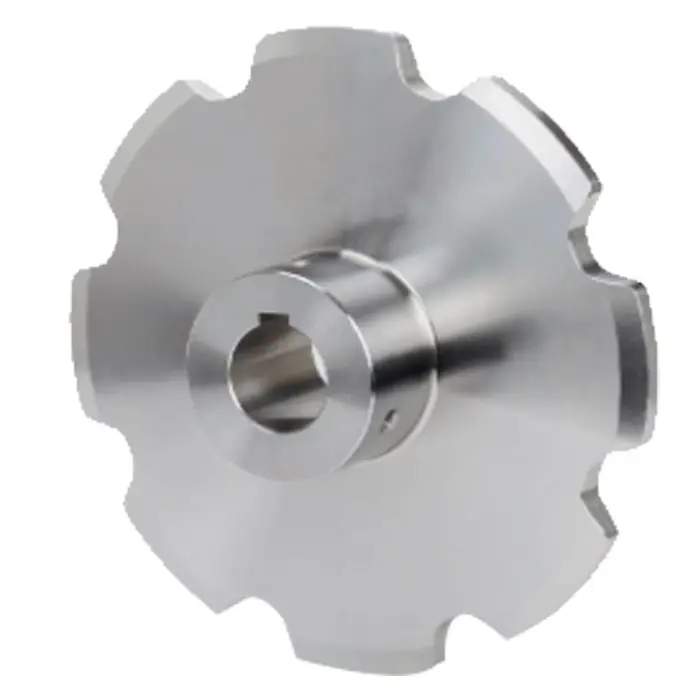
Hoe kies ik de juiste maat en steek van een ladderkettingwiel voor mijn transportbandsysteem?
Het kiezen van de juiste maat en steek van een ladderkettingwiel voor uw transportsysteem is cruciaal voor een goede werking, efficiënte krachtoverbrenging en een lange levensduur van de apparatuur. Hieronder vindt u de stappen om u door het selectieproces te leiden:
- 1. Identificeer het type transportketting: Bepaal welk type transportketting in uw systeem wordt gebruikt. Verschillende kettingtypen hebben specifieke steekmaten en het tandwiel van de kettinggeleider moet overeenkomen met de steek van de ketting om een goede aangrijping te garanderen.
- 2. Bepaal het aantal tanden van het tandwiel: Bereken het benodigde aantal tanden voor het kettingwiel op basis van de gewenste transportsnelheid, het toerental van de aangedreven as en de snelheidsfactor van de ketting. De snelheidsfactor wordt doorgaans door de kettingfabrikant opgegeven.
- 3. Houd rekening met de kettingwikkelhoek: Zorg ervoor dat de tandwielgrootte voldoende ruimte biedt voor de ketting om het tandwiel heen te wikkelen, zodat de ketting niet losraakt. De hoek van de kettingwikkeling moet binnen het door de fabrikant aanbevolen bereik liggen.
- 4. Beoordeel de belasting van de transportband: Evalueer de belasting van het transportsysteem en de maximale spanning die de ketting zal ondervinden. Het materiaal en het ontwerp van het kettingwiel moeten bestand zijn tegen deze belasting zonder vervorming of breuk.
- 5. Bepaal de asdiameter: De boring (binnendiameter) van het laddertandwiel moet overeenkomen met de diameter van de aangedreven as. Er kan ook een conische bus of een doorlopende naaf worden gebruikt om het tandwiel aan de asdiameter aan te passen.
- 6. Houd rekening met ruimtebeperkingen: Zorg ervoor dat de gekozen tandwielmaat van de ladder in de beschikbare ruimte van het transportsysteem past, zonder andere onderdelen te hinderen.
- 7. Raadpleeg de fabrikantgegevens: Raadpleeg de gegevens en specificaties van de fabrikant van de kettingwielen om de juiste maat en steekopties voor uw specifieke type transportketting te vinden.
- 8. Kies voor hoogwaardige materialen: Kies een ladderkettingwiel gemaakt van hoogwaardige materialen die een goede slijtvastheid en duurzaamheid bieden, vooral voor toepassingen in zware omstandigheden of bij zware belastingen.
- 9. Vraag deskundig advies: Als u twijfelt over het selectieproces, raadpleeg dan experts op het gebied van transportsystemen of fabrikanten van tandwielen voor hulp bij het kiezen van de juiste maat en steek van het laddertandwiel.
Door zorgvuldig rekening te houden met het type ketting, de belasting van de transportband, het aantal tanden van het tandwiel en andere relevante factoren, kunt u de juiste maat en steek van een laddertandwiel selecteren die optimale prestaties en betrouwbare krachtoverbrenging in uw transportbandsysteem garandeert.


editor by CX 2023-11-13


